
Exercise Guide
Dumbbell Fly: Are you opening your arms too fast?
Open your arms slowly while resisting the weight. Do not open them too fast.
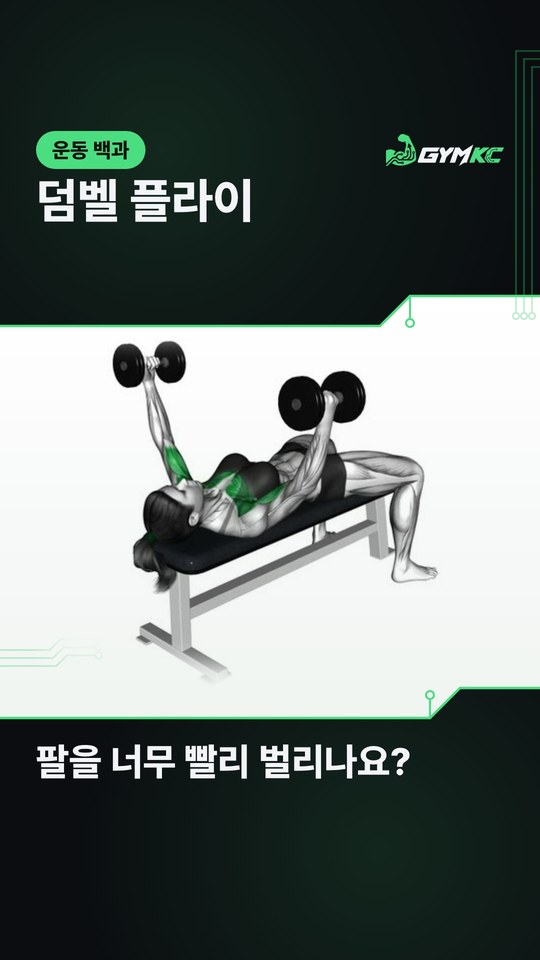
How to fix it
- Hold the dumbbells above your chest with your palms facing each other.
- Slowly open the dumbbells wide to the sides while resisting the weight.
- After opening them, bring the dumbbells back together above your chest.
Caution Do not bend your wrists as you lower or raise the dumbbells. Keep them straight.
The app sets the reps for your next set
Log a set and GYMKC calculates the weight and reps for your next set.
Last workout8 kg each hand × 11 repsAll sets completed
Next12 repsSame weight, more reps
Example for a beginner, using a routine you set up yourself.
Get GYMKC on the App StoreThe 14-day free trial applies only to Apple accounts subscribing for the first time, and the actual terms appear in the App Store payment sheet.
How far should you lower the dumbbells?
Sources differ on where to stop lowering. Some suggest lowering the dumbbells until they are at shoulder or chest height. Others suggest lowering them until you feel a stretch in your chest. Either way, lower the dumbbells slowly and with control.
See this exercise in detail
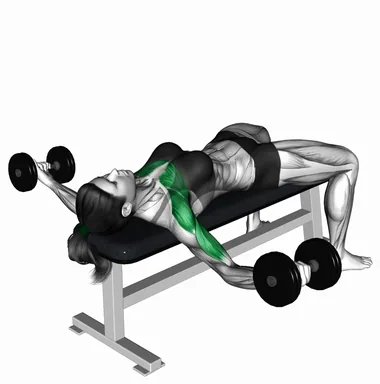
Dumbbell FlyFull form and how-to
More on the same body part
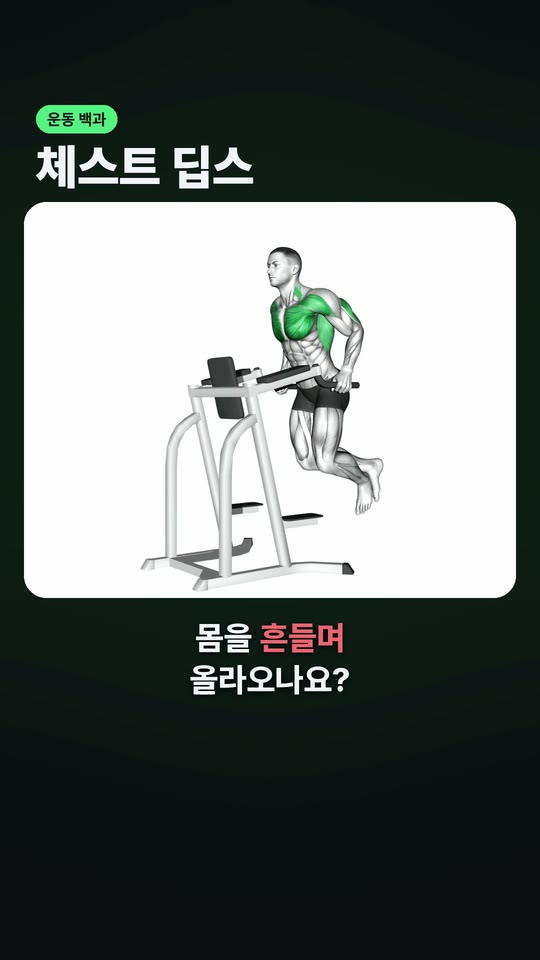
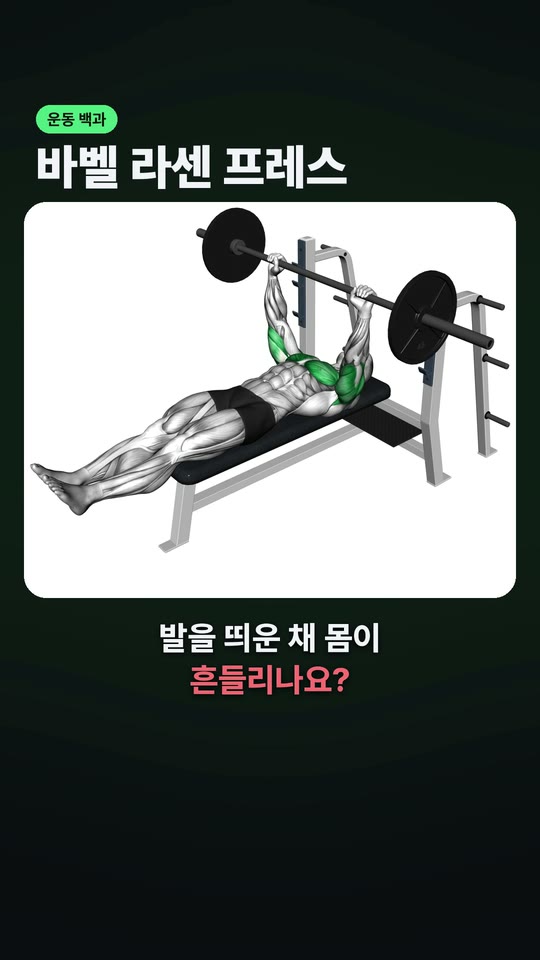
Sources
11 sources
- Western Illinois University, NSCA Lifting Proficiencies · Flat Dumbbell Fly (and Incline Version)
- NSCA, Basics of Strength and Conditioning
- Solstad TE et al., Journal of Sports Science and Medicine (2020)
- Campos YAC et al., Journal of Human Kinetics (2020)
- ACE, Exercise Library · Lying Chest Fly
- ExRx.net, Dumbbell Fly
- WebMD, A Guide to Doing Chest Flyes
- NFPT, How To Do Flat Bench Dumbbell Flyes
- Mayo Clinic, Weight training: Do's and don'ts of proper technique
- Bergquist R et al., Journal of Human Kinetics (2018)
- NSCA, Exercise Technique Manual for Resistance Training, 3rd ed. (Human Kinetics, 2016) · Flat Dumbbell Fly
This article is based on our analysis of public content from evidence-based training experts in Korea and abroad. It is not a substitute for medical advice.